
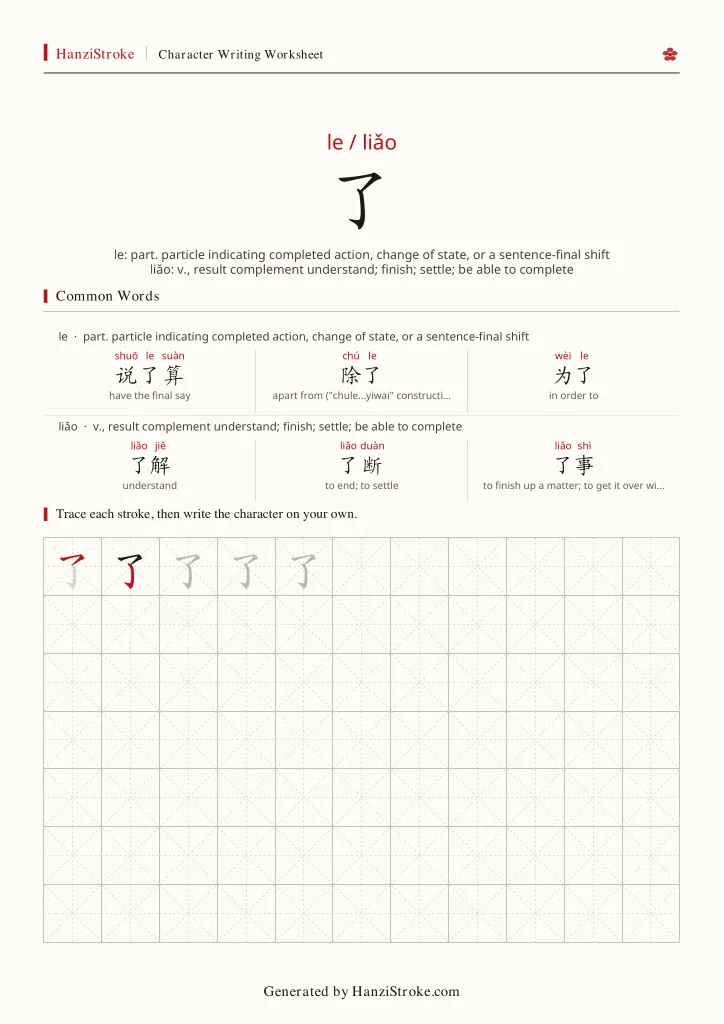
Completed action
verb + 了 + object
Use 了 after a verb to show that the action happened or is complete. It does not simply mean English past tense; it marks the action as completed.
我
吃
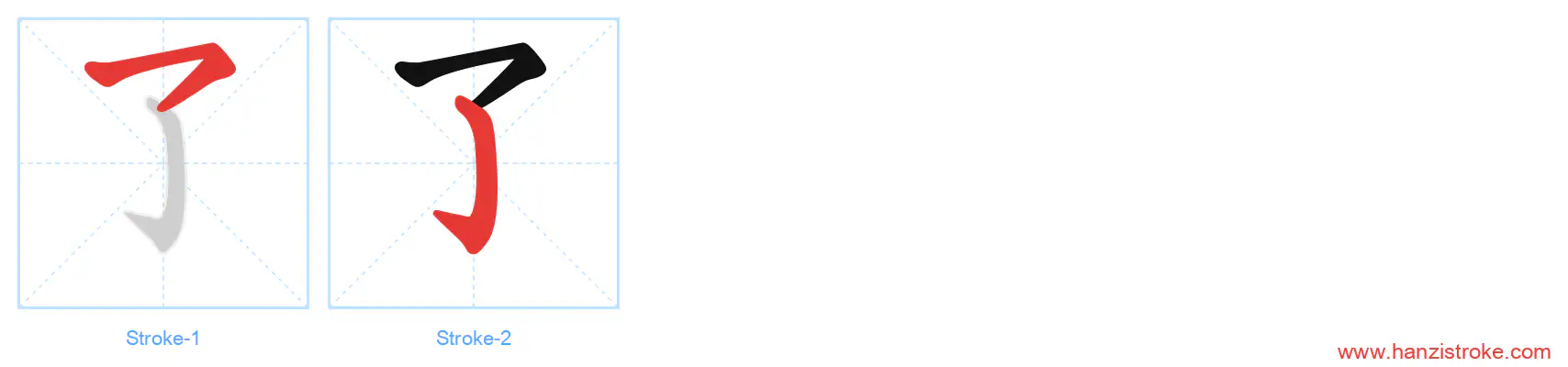
Watch the stroke order, then trace it yourself.
.%3C%2Fdesc%3E%3Cstyle%3E%0A%40keyframes%20draw-stroke%20%7B%0A%20%20to%20%7B%20stroke-dashoffset%3A%200%3B%20opacity%3A%201%3B%20%7D%0A%7D%0A%3C%2Fstyle%3E%3Cg%3E%3Crect%20x%3D%220%22%20y%3D%220%22%20width%3D%22500%22%20height%3D%22500%22%20fill%3D%22%238ecae6%22%3E%3C%2Frect%3E%3Cline%20x1%3D%220%22%20y1%3D%22250%22%20x2%3D%22500%22%20y2%3D%22250%22%20stroke%3D%22rgba(255%2C255%2C255%2C0.2)%22%20stroke-width%3D%221%22%3E%3C%2Fline%3E%3Cline%20x1%3D%22250%22%20y1%3D%220%22%20x2%3D%22250%22%20y2%3D%22500%22%20stroke%3D%22rgba(255%2C255%2C255%2C0.2)%22%20stroke-width%3D%221%22%3E%3C%2Fline%3E%3Ctext%20x%3D%22490%22%20y%3D%22488%22%20fill%3D%22%23ffffff%22%20font-size%3D%2218%22%20font-family%3D%22Arial%2C%20sans-serif%22%20text-anchor%3D%22end%22%20dominant-baseline%3D%22ideographic%22%20opacity%3D%220.8%22%3Ehanzistroke.com%3C%2Ftext%3E%3C%2Fg%3E%3Cdefs%3E%3CclipPath%20id%3D%22mask-1%22%3E%3Cpath%20d%3D%22M%20526%20549%20Q%20569%20571%20661%20633%20Q%20704%20664%20732%20669%20Q%20778%20679%20784%20698%20Q%20787%20708%20749%20753%20Q%20716%20793%20703%20793%20Q%20336%20721%20301%20716%20Q%20265%20715%20244%20719%20Q%20225%20723%20216%20711%20Q%20212%20702%20222%20690%20Q%20232%20675%20260%20657%20Q%20284%20638%20295%20639%20Q%20305%20638%20328%20653%20Q%20391%20698%20626%20741%20Q%20671%20750%20677%20746%20Q%20681%20745%20680%20739%20Q%20679%20729%20522%20577%20Q%20512%20570%20506%20563%20C%20484%20543%20500%20535%20526%20549%20Z%22%3E%3C%2Fpath%3E%3C%2FclipPath%3E%3CclipPath%20id%3D%22mask-2%22%3E%3Cpath%20d%3D%22M%20506%20563%20Q%20475%20585%20461%20588%20Q%20448%20591%20448%20567%20Q%20449%20549%20471%20533%20Q%20513%20497%20525%20417%20Q%20544%20180%20506%20126%20Q%20505%20126%20505%20124%20Q%20493%20114%20469%20123%20Q%20430%20130%20383%20141%20Q%20364%20148%20363%20140%20Q%20363%20137%20456%2050%20Q%20480%2028%20496%20-3%20Q%20506%20-13%20518%20-8%20Q%20534%20-1%20563%2042%20Q%20614%20127%20585%20436%20Q%20581%20464%20577%20485%20Q%20568%20528%20526%20549%20L%20506%20563%20Z%22%3E%3C%2Fpath%3E%3C%2FclipPath%3E%3C%2Fdefs%3E%3Cg%20transform%3D%22%0A%20%20%20%20translate(10%2C%20431.875)%0A%20%20%20%20scale(0.46875%2C%20-0.46875)%0A%20%20%22%3E%3Cg%20style%3D%22opacity%3A%201%3B%22%3E%3Cpath%20clip-path%3D%22url(%23mask-1)%22%20d%3D%22M%20135.1%20741.9%20L%20296%20678%20L%20401%20712%20L%20502%20736%20L%20666%20768%20L%20699%20764%20L%20716%20739%20L%20721%20715%20L%20534%20568%20L%20513%20563%22%20stroke%3D%22%23ffffff%22%20stroke-width%3D%22200%22%20fill%3D%22none%22%20stroke-linecap%3D%22round%22%20stroke-linejoin%3D%22miter%22%20stroke-dasharray%3D%22901.874497670036%2C901.874497670036%22%20style%3D%22opacity%3A%200%3B%20stroke-dashoffset%3A%20901.835%3B%20stroke-dasharray%3A%20901.835%3B%20animation%3A%20800ms%20linear%200ms%201%20normal%20forwards%20running%20draw-stroke%3B%22%3E%3C%2Fpath%3E%3Cpath%20clip-path%3D%22url(%23mask-2)%22%20d%3D%22M%20388.8%20643.2%20L%20532%20506%20L%20551%20451%20L%20564%20290%20L%20556%20153%20L%20541%20101%20L%20515%2068%20L%20470%2084%20L%20367%20141%22%20stroke%3D%22%23ff0000%22%20stroke-width%3D%22200%22%20fill%3D%22none%22%20stroke-linecap%3D%22round%22%20stroke-linejoin%3D%22miter%22%20stroke-dasharray%3D%22816.8694099868092%2C816.8694099868092%22%20style%3D%22opacity%3A%200%3B%20stroke-dashoffset%3A%20816.877%3B%20stroke-dasharray%3A%20816.877%3B%20animation%3A%20800ms%20linear%201000ms%201%20normal%20forwards%20running%20draw-stroke%3B%22%3E%3C%2Fpath%3E%3C%2Fg%3E%3C%2Fg%3E%3C%2Fsvg%3E)
3,530 learners practiced this
了has 2 distinct pronunciations with different meanings
Use 了 after a verb to show that the action happened or is complete. It does not simply mean English past tense; it marks the action as completed.
I ate / I have eaten
he bought a book
we watched a movie
A sentence-final 了 often means the situation is now different: something started, stopped, became true, feels stronger, or is about to happen.
it started raining
I am hungry now
great; very good
almost there
Some common words contain neutral-tone 了. In 为了 and 除了, learn the whole word instead of treating 了 as a sentence particle.
When 了 is pronounced liǎo, it often means understand, finish, settle, become clear, or be able to complete/endure something. This is different from the neutral-tone particle le.
desperately serious disastrous; terrible
be immediately obvious; stick out a mile
For health, I exercise every day.
His explanation made me understand this problem clearly.
I understand this problem.
My work is already finished.
This matter cannot be handled hastily.
never-ending
Explore characters by relationship
Characters from the same exam level.
Characters pronounced "le".
Characters with radical "乙".