to bend, to bow; a kind of ancient leather ball
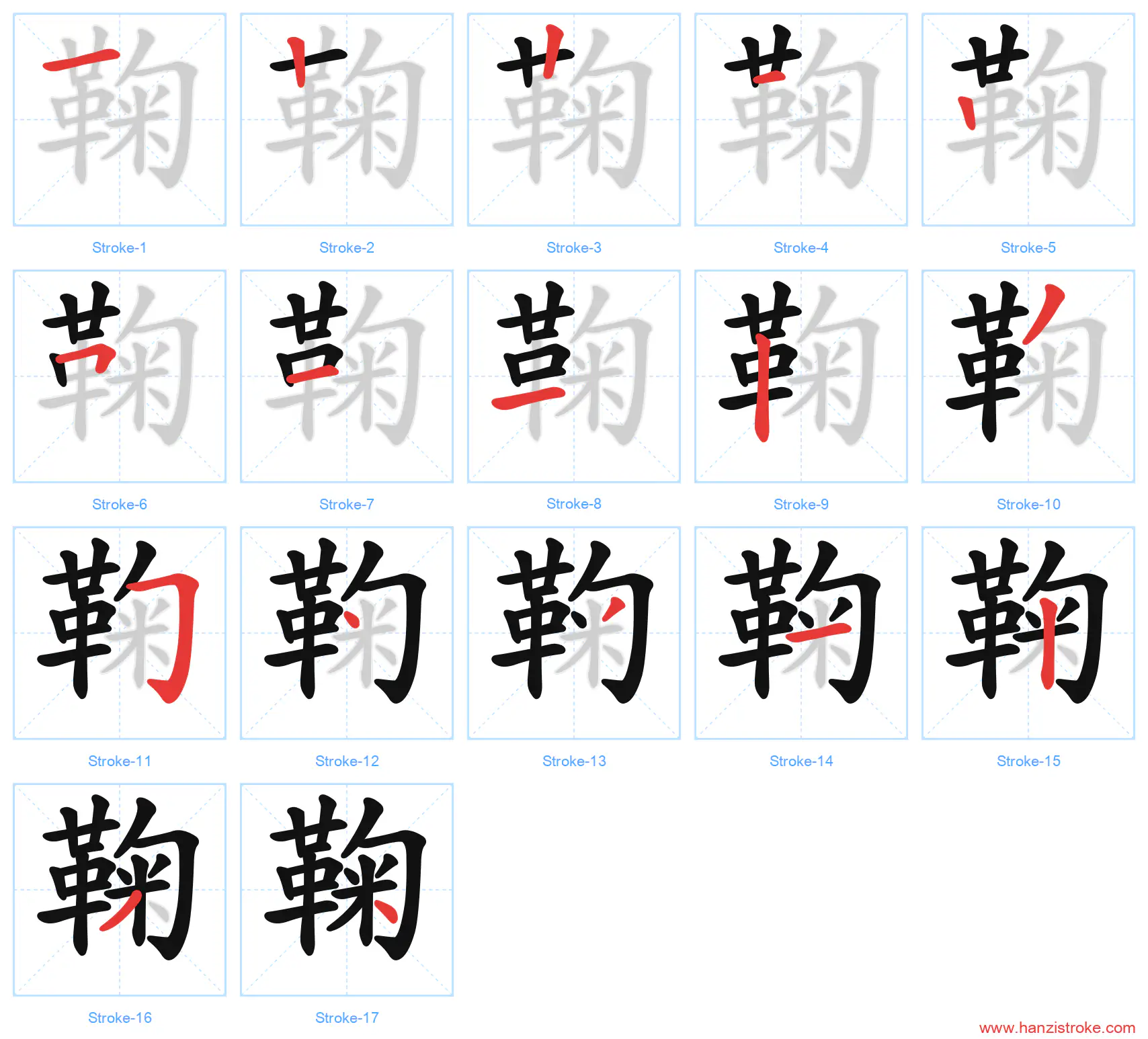
Animated Stroke Order 鞠
Stroke Order Diagrams 鞠

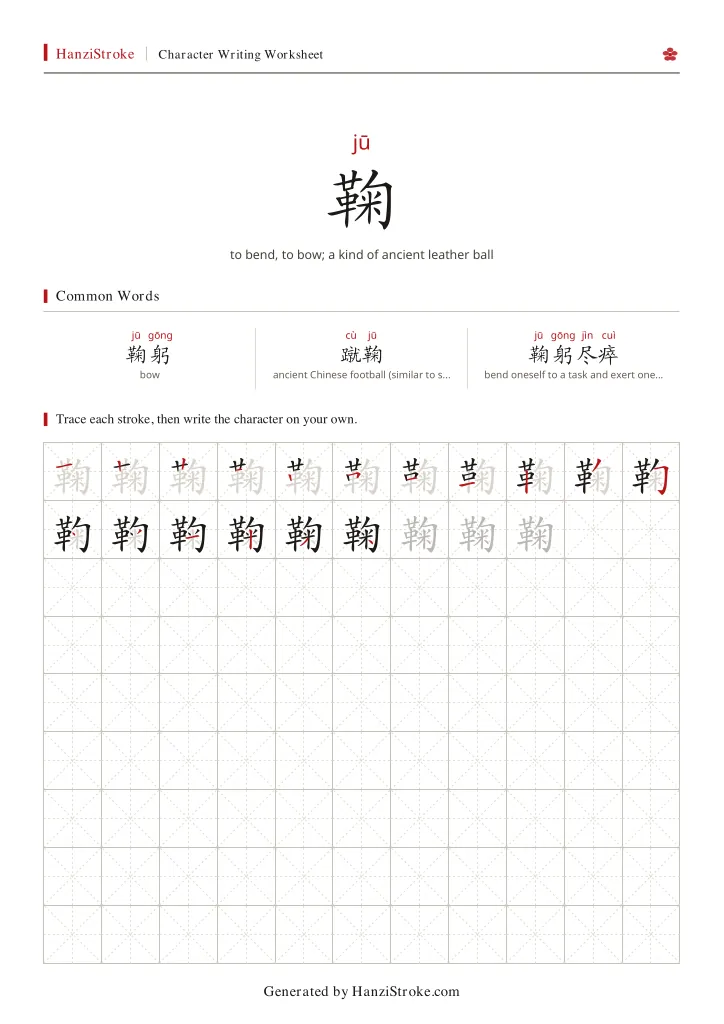
Free Printable Handwriting Practice with Stroke Order: 鞠
Download and print worksheets to practice writing 鞠
FREE

Preview of Portrait worksheet
HSK Vocabulary: 鞠
HSK words that contain this character.
Example Sentences
Real-world example sentences demonstrating how 鞠 is used in context
1
tā他
xiàng向
lǎo老
shī师
shēn深
shēn深
jū鞠
gōng躬
biǎo表
shì示
jìng敬
yì意
。
He bowed deeply to the teacher to show respect
2
tā她
jìn尽
xīn心
jìn尽
lì力
jū鞠
yù育
zǐ子
nǚ女
chéng成
cái才
。
She devoted herself to raising her children to become talented
3
fù父
mǔ母
xīn辛
kǔ苦
jū鞠
yǎng养
wǒ我
men们
zhǎng长
dà大
chéng成
rén人
。
Parents worked hard to raise us to adulthood
4
tā他
jū鞠
gōng躬
shuō说
xiè谢
xiè谢
。
He bowed and said thank you.
5
biǎo表
yǎn演
jié结
shù束
hòu后
,
yǎn演
yuán员
men们
xiàng向
guān观
zhòng众
jū鞠
gōng躬
zhì致
yì意
。
After the performance, the actors bowed to the audience.
6
zài在
zhèng正
shì式
chǎng场
hé合
,
rén人
men们
cháng常
cháng常
jū鞠
gōng躬
biǎo表
shì示
zūn尊
jìng敬
。
In formal occasions, people often bow to show respect.
Information
Traditional鞠
Radical革
Strokes17
StructureLeft-Right
Frequency#3034
Zhuyinㄐㄩ
Components—
UnicodeU+97A0
CangjieTPFD
☯️
Cultural note
Traditional Chinese culture often connects characters and names with the Five Elements (Wood, Fire, Earth, Metal, Water) and Yin–Yang, a system also used to describe personality tendencies.
Learn how the Five Elements describe personalityRelated Characters
Explore characters by relationship
No HSK level data available